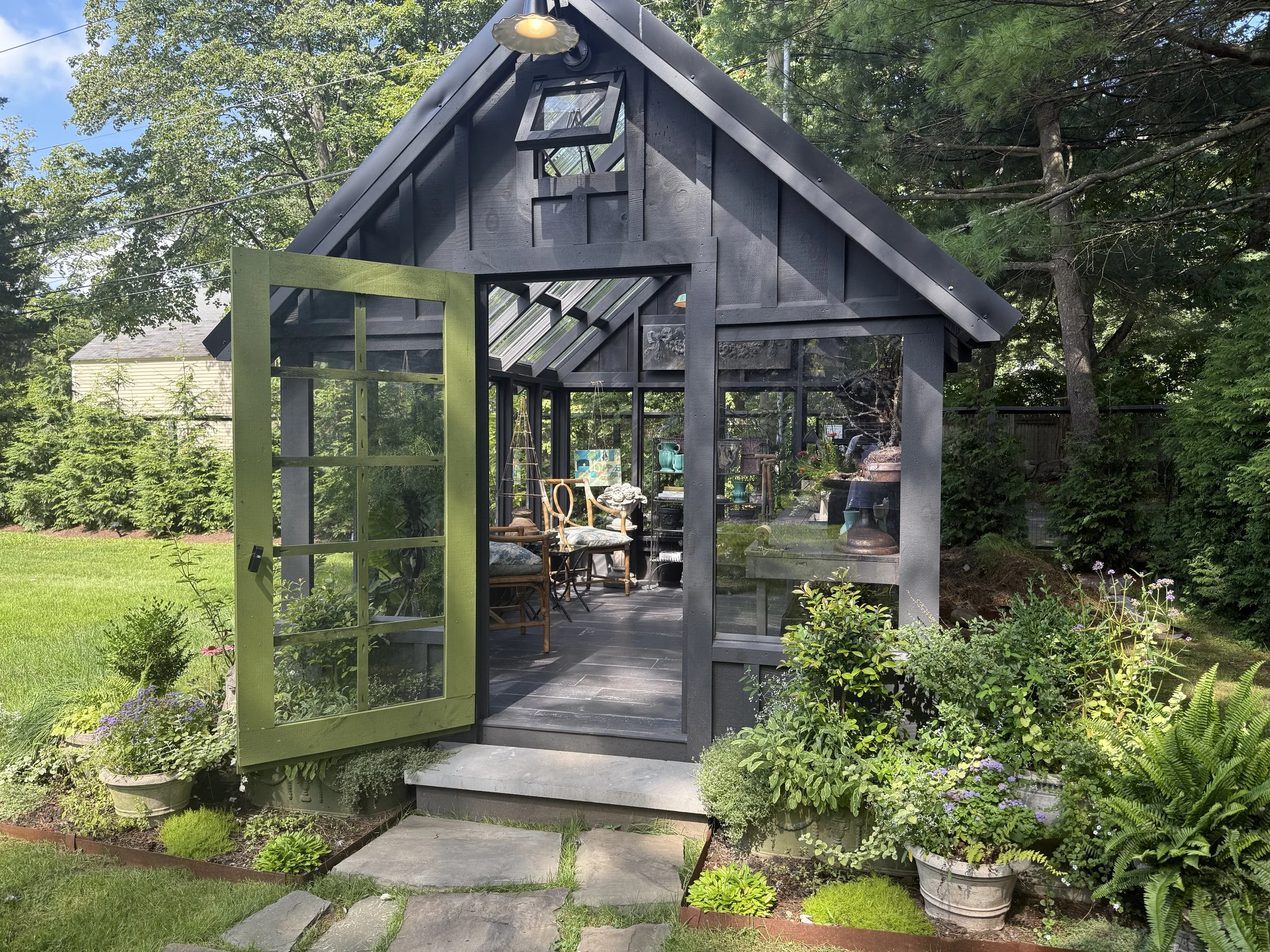
My wife is an outdoor stylist. She designs spaces for a living—knows exactly how to arrange plants, light, and composition to make something beautiful. But when it comes to our own garden, she'll be the first to tell you: all the design skill in the world can't make a succulent plant thrive in January.
The garden doesn't care what you know. It cares about seasons.
We both work in creation—she with spaces and style, me with strategy and ideas. We like the making together. But the garden taught us something neither of our professions quite admits: not everything moves on your timeline.
There's yield and there's effort. We talk about them like they're connected. Work harder, get more. That's how it works in the office. That's not how it works in the ground.
You can prepare the soil perfectly. You can water obsessively. You can give a plant everything it needs. And if it's the wrong season, nothing happens. You can't force a bloom out of season. You can't make something grow faster by willing it to. You can't harvest what's not ready, and you can't skip the waiting.
Most of life isn't like the garden. Most of life rewards effort with results, usually on a timeline you control. So we carry that assumption everywhere: if I work harder, if I try more, if I push harder, I can make it happen.
The garden says no.
The garden says: you prepare, you tend, you show up. And then you wait. And the waiting is not wasted time. The waiting is growth you can't see. The waiting is transformation happening underneath, in the soil, in the roots.
Some seasons are for planting. Some are for tending. Some are for harvest. Some are for rest. You can't rush through a season because you're impatient for the next one. You can't skip winter because spring would be nicer.
The hardest part of gardening isn't the work. It's the surrender. It's accepting that there's a limit to what effort can do. Some things are out of your control. Some things take their own time. Some things fail despite perfect conditions, and that's not your failure—that's just how it works.
My wife and I have learned to stop fighting the seasons. We've learned what grows when, what needs patience, what needs protection, what needs to be let go. We've learned that a garden well-tended might not produce what we wanted, but it will produce something. Usually something better than what we planned.
That translates. To work. To relationships. To the projects we're building. To the version of ourselves we're trying to become.
You can't force a career pivot in the wrong season. You can't rush a relationship into intimacy. You can't manufacture results that aren't ready. You can't harvest before the harvest is ready.
What you can do is prepare. Tend. Show up. Learn what season you're actually in, and work with that instead of against it.
The garden is patient. We're still learning to be.
But we're learning.